
-
 Enlarge
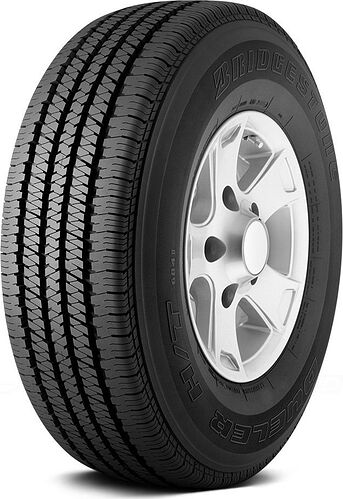
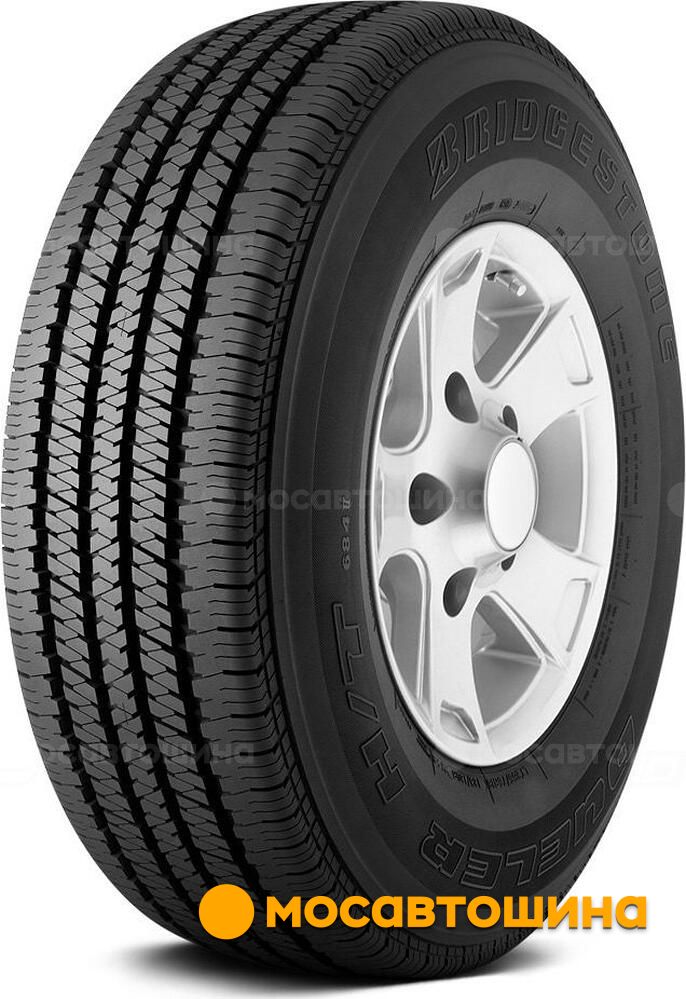
 Bridgestone Dueler H/T 684II
Description Bridgestone Dueler H/T 684II
All-season passenger tire Bridgestone Dueler H/T 684II is distinguished by its rare versatility. I.e. this particular model is perfectly suited for moving on difficult sections of off-road, as well as on asphalt, where it demonstrates a low noise level in combination with a soft ride. Its high operational characteristics are evidenced by the fact that this tire is supplied to the assembly lines of leading world brands, including Toyota and its legendary SUV Land Cruiser.
The tire's signature balance is largely due to the patented UNI-T technology, which is a whole complex of various developments and innovations used in the design of the carcass, sidewalls, and tread. However, the main distinguishing features of this technology are the rounded tread profile, which provides reliable handling in any conditions, and the rubber compound, the technical carbon in the composition of which made it possible to significantly reduce the noise and wear of the tire.
UNI-T
The UNI-T technology was first introduced and implemented back in 1996. This tire uses the third generation of this technological complex, which consists of nine main components. It is worth noting that the Japanese manufacturer uses UNI-T in mid-range and premium tires, which include all Dueler models.
Flat Force Block
This name hides blocks with the same degree of stiffness. The practical result of this technical solution was the excellent stability of the Bridgestone Dueler H/T 684 2 tire, both when driving in a straight line and when performing maneuvers.
O-Bead
This component is the sidewalls with a rounded profile, i.e. in the shape of the letter "O". Thanks to this, the tire demonstrates excellent softness of the ride, smoothing out even significant irregularities.
Super L.L. Carbon
This model uses an improved rubber compound, the distinctive feature of which is the presence of extended carbon chains in its formula, which minimized the likelihood of microscopic cracks. This made it possible to significantly increase the resistance of the tread to premature wear.
AQ Compound
This component also refers to the composition of the rubber compound. It represents a special component that partially replaces oil, helping to maintain the elasticity of the tread at an optimal level throughout the entire service life of the tire. This happens due to continuous vulcanization of the tread at the microscopic level.
Dual Layer Tread
This name hides a two-layer structure of the tread. I.e. this technology implies the manufacture of a tread consisting of two layers of rubber, each of which performs a certain range of tasks. The outer layer is designed to provide high traction characteristics with a low level of tread wear, and the inner layer is with strong tread wear. Thanks to this original technical solution, the tire has excellent traction characteristics even at high mileage.
C.S.C
The name of this component is decoded as Hydro Evacuation Surface, and its purpose is to counteract the occurrence of the aquaplaning effect when driving on a wet surface. The essence of this technology is to reduce the coefficient of resistance to the flow of liquid, which allows for the removal of large volumes of excess moisture from the contact patch. This is achieved through the same rubber compound, namely its hydroevacuation structure.
Practicle Z
Z-particles have become a new component of the tread rubber compound, replacing silicon-containing components. Compared to them, aqua-particles have significantly improved traction on wet surfaces, maintaining them at the initial level, regardless of the degree of tread wear.
C.T.D.M.
This component is a computer simulation of the tire design. Thanks to modern development tools, Japanese tire makers were able to select the optimal carcass design, tread pattern design, and rubber compound composition, which made it possible to provide the best operational characteristics.
New dueler tread design
The versatility of the characteristics of this model was largely ensured by the S-shaped non-directional symmetric tread pattern. It consists of four functional elements - longitudinal ribs, each of which is designed to solve a strictly defined range of tasks. All longitudinal ribs are separate rows of tread blocks. At the same time, the Bridgestone Dueler H/T 684II ribs, located in the central part of the tread, consist of blocks divided into four separate parts. Thanks to this solution, the contact patch has an abundance of sharp edges, which provide excellent traction characteristics, especially on slippery surfaces.
Another distinctive feature of the tread pattern design is the construction of the shoulder areas. Like the longitudinal ribs in the central part of the tread, its shoulder areas also represent separate rows of blocks. But, unlike them, these blocks have not only massive sizes but also a monolithic structure, which makes this part of the tread more rigid, thereby improving handling on asphalt. As for off-road, when driving on it, the shoulder area blocks act as soil grippers, allowing for more confident overcoming of difficult areas, for example, sandy or muddy.
Main features of the Bridgestone Dueler H/T 684II model
- The dense arrangement of tread blocks provides excellent grip on slippery surfaces;
- Rounded walls of drainage grooves increase the efficiency of water evacuation, which improves the tire's resistance to aquaplaning;
- Optimized shape and arrangement of blocks, which provides excellent performance both on regular roads and off-road;
- A large number of high and massive blocks in the shoulder areas of the tread allow for more confident movement on sand, mud, and snow;
- Excellent efficiency on various types of surfaces, thanks to a symmetric non-directional tread pattern developed using computer simulation tools;
- The O-shaped profile of the carcass provides softness and comfort when moving.