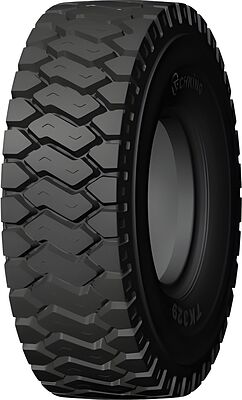
Techking TK329 C1 — a radial tire designed for the intense operating conditions of front loaders and dump trucks. The model is manufactured in China, where they have long learned to make special tires no worse than world leaders. It is designed for quarries, construction sites, and mine dumps — where every tire works at the limit of its strength.
Radial carcass
The model features a radial construction. For heavy-duty conditions, this provides decisive advantages:
- less heat generation during prolonged operation at low speeds;
- optimized rolling resistance — fuel savings of up to 8%;
- better obstacle circumvention, reduced risk of cord rupture.
Additionally, the carcass is reinforced with a multi-layer breaker made of steel cord. The result is high resistance to ruptures and cuts, which is critical when working with rock fragments.
Super-deep tread
The actual tread depth exceeds 40 mm. As a result, reliable protection against punctures, excellent traction on loose and slippery surfaces, and increased mileage. Large blocks also increase overall strength and resistance to tearing.
Engineered groove geometry
The tire features deep grooves of variable cross-section with expansions at the base. When the wheel rotates, centrifugal force and tire deformation push stuck stones outward. The self-cleaning system works even in sticky soil. The anti-slip design is complemented by a horizontal pattern on the blocks. These micro-grooves provide additional traction when braking and starting on inclined surfaces.
Key features of Techking TK329 C1:
- applicability — front loaders, dump trucks (quarries, construction sites, mines, dumps);
- super-deep tread providing effective protection against mechanical damage;
- large grooves with variable geometry that expel stones and dirt, eliminating "clogging";
- anti-slip design – horizontal pattern on blocks prevents slipping on inclines.
 Enlarge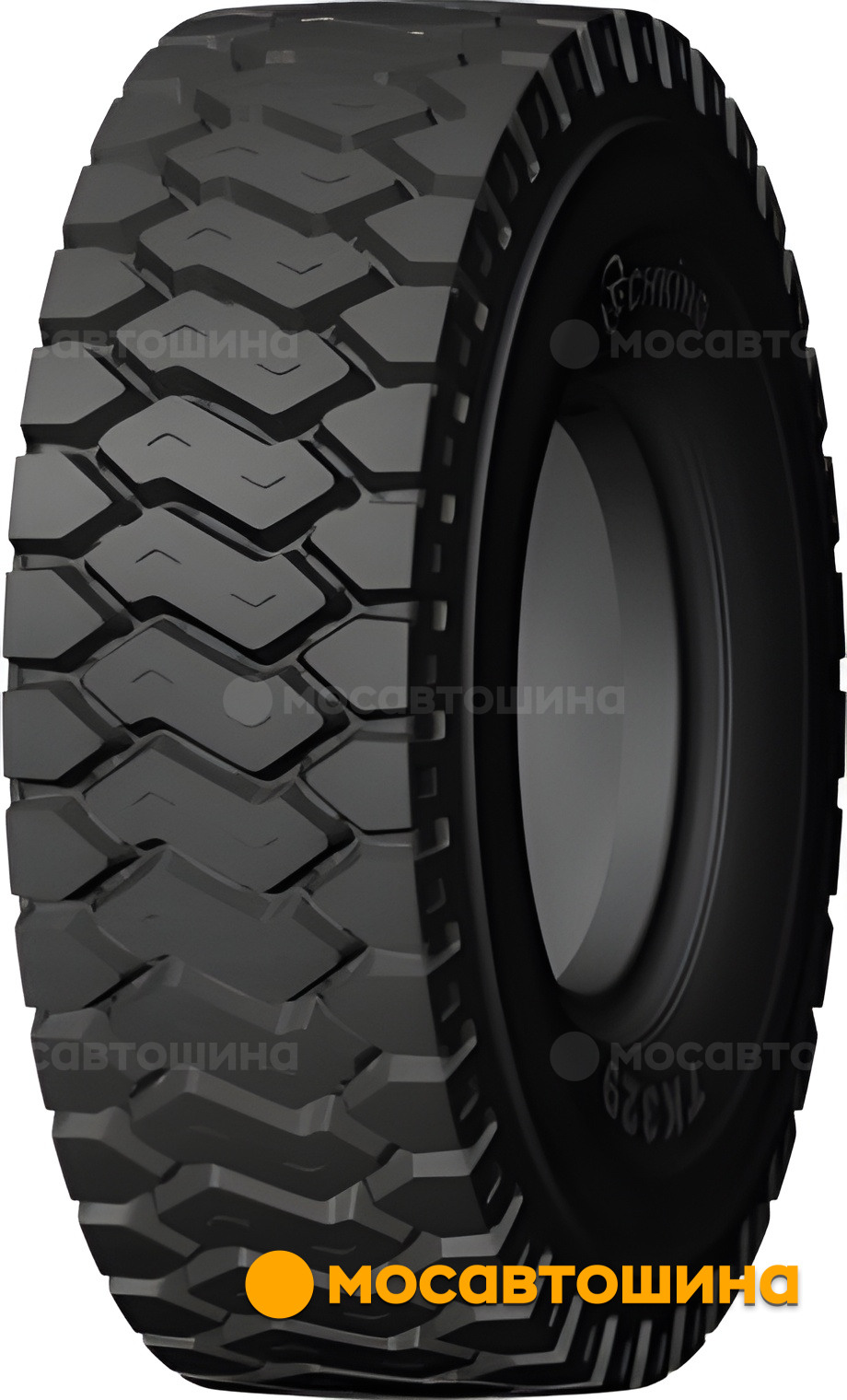
 КИТАЙ
КИТАЙ