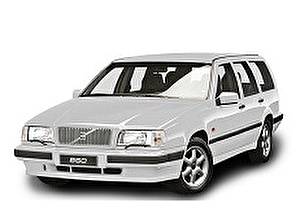
Tyres and wheels for Volvo 850, wheel size on Волво 850
Другие модели Volvo
Volvo 140, Volvo 164, Volvo 240, Volvo 260, Volvo 340, Volvo 360, Volvo 440, Volvo 460, Volvo 480, Volvo 66, Volvo 740, Volvo 760, Volvo 780, Volvo 850, Volvo 940, Volvo 960, Volvo Amazon, Volvo C30, Volvo C40, Volvo C70, Volvo C70 Convertible, Volvo C70 Coupe, Volvo EC40, Volvo EM90, Volvo ES90, Volvo EX30, Volvo EX30 Cross Country, Volvo EX40, Volvo EX60, Volvo EX60 Cross Country, Volvo EX90, Volvo S40, Volvo S60, Volvo S60 Cross Country, Volvo S70, Volvo S80, Volvo S90, Volvo V40, Volvo V40 Cross Country, Volvo V50, Volvo V60, Volvo V60 Cross Country, Volvo V70, Volvo V90, Volvo V90 Cross Country, Volvo XC40, Volvo XC60, Volvo XC70, Volvo XC90,Параметры дисков на Волво 850
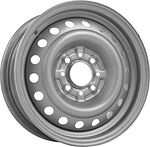
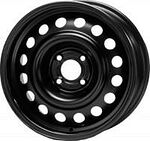
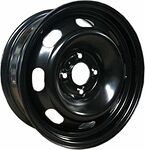
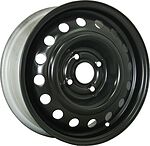
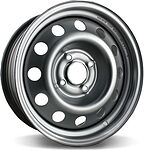
- PCD 4x10⁸ диаметром от 15 до 16, шириной от 6 до 6.5 и профилем от ET43 до ET43
- PCD 5x10⁸ диаметром от 16 до 16, шириной от 6.5 до 6.5 и профилем от ET43 до ET43как у Chery M11
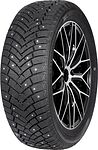
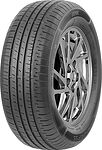
Tires on Volvo 850
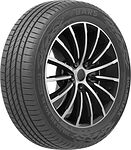
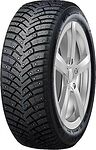
- Tyre size from R15 to R16, width from 185 to 205 and profile from 50 to 65.
- Minimum tyre size: 185/65 R15, maximum: 205/55V R15







Tires on Volvo 850 (Волво)
The debut of the Volvo 850 took place in 1991. The car became one of the most important in the history of the Swedish manufacturer. It opened a new technical era for the company, as it was the first to combine front-wheel drive, a transverse 5-cylinder engine, and a completely new platform. The development lasted almost ten years and required significant investments, which explains the high level of engineering refinement of the design. Volvo aimed to create a mid-range model that could compete with German premium segment models, but at the same time, retain the company's traditional emphasis on safety and practicality.New Platform and Layout
One of the main features was a fundamentally new architecture. Unlike the company's previous models, which used rear-wheel drive, a front-wheel drive layout with a transversely mounted engine was used here. This allowed for an increase in interior space and improved handling on slippery surfaces.
The platform received a fully independent suspension. At the front, a McPherson scheme was used, and at the rear, an original Delta-link design developed by Volvo engineers. It combined the advantages of independent suspension and the stability characteristic of semi-independent schemes. This solution provided good handling without compromising comfort. The body was distinguished by high rigidity. Engineers paid special attention to the power structure and programmable deformation zones, thanks to which the car demonstrated high passive safety indicators.
Engine Range
The model became the debut for the Swedish brand's inline "fives". Engines with this layout offered a compromise between compact dimensions and smooth operation, combining the compactness of 4-cylinder power units and the low vibration level characteristic of "sixes". The base versions were equipped with "atmospheric" engines with a volume of 2 and 2.5 liters. They were distinguished by a smooth torque and characteristic sound. Their turbocharged versions were offered at the "medium" level of equipment. The top-of-the-line versions were "charged" sedans and wagons - T-5 and T-5R with a power output of 220 horsepower.
Safety Technologies
Safety has traditionally been a key priority for Volvo, and the 850 model became one of the leaders of its time in this area. The car received a reinforced body frame and a thought-out system for distributing impact load. One of the important innovations was the SIPS side impact protection system. It included reinforced sills, special elements in the doors, and a seat structure that absorbed collision energy. Later, the model also received side airbags. Also, this car was one of the first to feature integrated child seats in the rear row of seats - a practical solution that emphasized the family orientation of the model.
Equipment and Comfort Level
For the 1990s, the car offered a fairly rich set of equipment. Already in the base versions, there were anti-lock braking systems, power steering, and an efficient heating system. More expensive trim levels were equipped with leather trim, electric seat adjustments, climate control, and high-class audio systems. The Estate wagon was distinguished by an especially spacious luggage compartment and a well-thought-out system for securing cargo. High ergonomics of the driver's workplace also became a characteristic feature of the model. The controls were logically and conveniently located, and the large glazing provided excellent visibility.
Differences from Competitors
In the early 90s, the main competitors were the Audi 100, BMW 5-Series, and Mercedes-Benz E-Class. However, the Swedish model differed significantly from them in design philosophy. Firstly, "Volvo" used front-wheel drive, while German sedans mainly retained the classic rear-wheel drive scheme. This provided more predictable behavior on slippery roads. Secondly, the 5-cylinder engines gave the car a special character and were distinguished by a high torque at medium revs. Finally, it stood out among competitors with a developed complex of safety systems, which at that time was one of the most advanced in the class.
Here, various wheel options were used depending on the modification and year of release. Factory configurations provide a landing diameter of 15, 16, and 17 inches, which allows for varying the balance between comfort and sporty handling. It is these that can always be purchased at the "Mosavtoshina" online store.
Advantages of selecting tires for the Volvo 850 on our website:
- the catalog offers a wide range of tires that fully correspond to the technical characteristics of this car;
- wheels with diameters from 15 to 17 inches with "factory" parameters are constantly available;
- new and regular customers can count on buying high-quality wheel products at a reduced price due to regularly held promotions and special offers;
- specialists will promptly help resolve any difficulties with finding tires and wheels with suitable parameters.