Tyres and wheels for Dodge Grand Caravan, wheel size on Додге Гранд Сараван
Подбор шин и дисков по автомобилю Додге Гранд Сараван
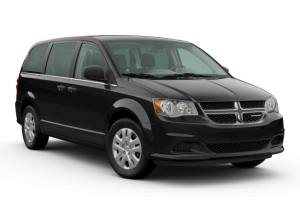
Другие модели Dodge
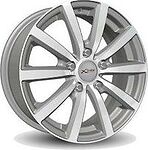
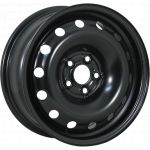
Dodge Aries, Dodge Attitude, Dodge Avenger, Dodge B150, Dodge Caliber, Dodge Caliber SRT-4, Dodge Caliber SRT4, Dodge Caravan, Dodge Challenger, Dodge Challenger SRT-8, Dodge Charger, Dodge Charger Pursuit, Dodge Charger SRT, Dodge Colt, Dodge D150, Dodge Dakota, Dodge Dart, Dodge Durango, Dodge Durango SRT, Dodge Dynasty, Dodge Forza, Dodge Grand Caravan, Dodge Hornet, Dodge Intrepid, Dodge JC, Dodge Journey, Dodge Magnum, Dodge Magnum SRT-8, Dodge Monaco, Dodge Neon, Dodge Neon SRT-4, Dodge Nitro, Dodge Ram 1500, Dodge Ram 2500, Dodge Ram 3500, Dodge Ram SRT, Dodge Ram SRT10, Dodge Ram Van B250, Dodge Ram Van B2500, Dodge Ram Van B350, Dodge Royal Monaco, Dodge Spirit, Dodge Sprinter, Dodge Stealth, Dodge Stratus, Dodge Van 1500, Dodge Van 3500, Dodge Viper, Dodge Vision,Параметры дисков на Додге Гранд Сараван
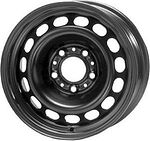
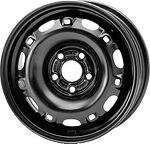
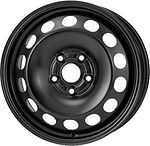
- PCD 5x100 диаметром от 14 до 15, шириной от 5.5 до 6.5 и профилем от ET40 до ET40как у Toyota Prius Prime
- PCD 5x114.3 диаметром от 15 до 17, шириной от 6.5 до 6.5 и профилем от ET40 до ET40как у Nissan Qashqai+2
- PCD 5x127 диаметром от 16 до 19, шириной от 6.5 до 7 и профилем от ET40 до ET40как у GAC Fiat Fei Yue
Tires on Dodge Grand Caravan
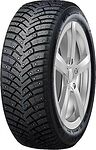
- Tyre size from R14 to R19, width from 195 to 235 and profile from 50 to 75S
- Minimum tyre size: 195/75 R14, maximum: 235/50 R18
Favorite summer tires
Наиболее популярные модели шин











Tires on Dodge Grand Caravan (Додге)
The Dodge Grand Caravan is part of a line of minivans, differing in increased length. It was produced from 1987 to 2020.Creation History
The origins of the model date back to the second half of the 1970s, when Chrysler began developing a passenger car with a larger internal space than the wagons of those years. At the same time, engineers sought to create a model with "passenger" comfort and handling, as well as with a floor as low as possible, since they were limited by the standard height of garage houses of that time. The car went into mass production in the fall of 1983, both in five- and seven-seat versions. It turned out to be extremely popular, and not only due to its large internal space. The car already had quick-release sofas and chairs in its standard configuration, which allowed for flexible variation of both seats and the volume of the luggage compartment. But many potential buyers needed an even more spacious minivan.First Generation
As part of the update of the first-generation minivan, the manufacturer introduced this model in 1987, which differed in an increased wheelbase. Moreover, most of the additional centimeters went to the luggage compartment. This led to changes in the engine range. The base engine was a 2.5-liter inline-four with an electronically controlled fuel injection system, which was not much more powerful than its predecessor but provided more torque at low and medium speeds. Another innovation was the appearance of a V-shaped 6-cylinder engine with a power of 136 hp from Mitsubishi. It was these modifications that became the most popular, remaining so despite the presence in the engine range of a more economical 2.5-liter inline-four with a turbocharger. Until the end of mass production, the manufacturer offered increasingly powerful power units, which is logical given the significant weight and size of this car.Second Generation
In the late summer of 1990, the production of the second-generation car began. Given the successful sales of the predecessor, the manufacturer preferred to go the way of evolution, subjecting the model to a large-scale modernization. The front doors turned out to be interchangeable, which cannot be said about the other body parts. Preserving the stylistic similarity with the previous model, the car differed radically in the design of the front part, the silhouette of which not only became more sloping but also had all the edges noticeably rounded. Another innovation was the revision of the chassis settings, the front suspension received other shock absorbers and springs, which made it possible to significantly improve handling. The engine range was changed, receiving engines from larger minivans created on the Chrysler AA platform. The base power unit was a 3-liter inline-six gasoline engine from Mitsubishi. In 1990, it was replaced by an even more powerful V6 with a volume of 3.3 liters. In a more expensive version of the equipment, a 3.8-liter gasoline engine was used instead.Third Generation
In the winter of 1995, the manufacturer introduced the third-generation car, which became the most popular. This was largely due to the use of a new Chrysler HC platform, which not only expanded the list of mechanical components and electronic systems available for installation but also allowed for flexible variation of them. In addition, the car became much more convenient to use in everyday life, as it first appeared with a sliding door on the driver's side. In turn, the salon was equipped with seats and sofas with roller mounting Easy Out, which made it possible to change the internal layout, if not with one hand. In technical terms, there were not many innovations. The front suspension was still a classic "MacPherson", and a non-separable bridge and leaf springs were preserved at the back. This decision was dictated by several factors at once. One of them was the possibility of maximizing the volume of the luggage compartment, as well as maintaining acceptable handling when fully loaded, which could reach 700 kg. The increase in track on the front axle was probably the only innovation, which made it possible to place the engine and transmission lower, reducing the height of the hood, as well as increasing the steering angle, reducing the turning radius.Fourth Generation
The car of the fourth generation was presented in 2000, being built on the Chrysler RS platform. It differed in slightly larger dimensions than its predecessor but did not look bulky due to the new design. The concept of the car remained unchanged, except for a much wider list of equipment, both in standard and additional configuration. In particular, the car already had electric mirrors, keyless access in the "base". In turn, the most expensive versions offered a 3-zone climate control, electric sliding door drive on both sides.Fifth Generation
The car of the next generation debuted in 2007. The model underwent another design change, becoming more like a crossover. The changes under the hood were no less significant. A new 6-speed automatic transmission appeared, which became standard for both V6 engines with a volume of 3.8 and 4 liters. At the same time, modifications with a four-wheel drive system became less accessible. In 2020, the brand stopped mass production of the model, citing regulatory restrictions, since the safety requirements introduced earlier made it impossible to create an affordable minivan. Nevertheless, starting from the third generation, many instances of this model appeared in our country and are still on the move, occasionally requiring replacement of tires and wheels. This product is represented in a wide range in the online store "Mosavtoshina".Advantages of selecting tires for Dodge Grand Caravan on our website:
- the catalog has a large number of tires and wheels developed specifically for full-size American brand minivans;- the selection system integrated into our site allows you to find the most suitable options for this car without error;
- all offered products have a long-term warranty;
- our employees will always help with the selection, provide the most comfortable conditions for buying tires and wheels.