Tyres and wheels for Dodge Charger, wheel size on Додге Чарджер
Подбор шин и дисков по автомобилю Додге Чарджер

Другие модели Dodge
Dodge Aries, Dodge Attitude, Dodge Avenger, Dodge B150, Dodge Caliber, Dodge Caliber SRT-4, Dodge Caliber SRT4, Dodge Caravan, Dodge Challenger, Dodge Challenger SRT-8, Dodge Charger, Dodge Charger Pursuit, Dodge Charger SRT, Dodge Colt, Dodge D150, Dodge Dakota, Dodge Dart, Dodge Durango, Dodge Durango SRT, Dodge Dynasty, Dodge Forza, Dodge Grand Caravan, Dodge Hornet, Dodge Intrepid, Dodge JC, Dodge Journey, Dodge Magnum, Dodge Magnum SRT-8, Dodge Monaco, Dodge Neon, Dodge Neon SRT-4, Dodge Nitro, Dodge Ram 1500, Dodge Ram 2500, Dodge Ram 3500, Dodge Ram SRT, Dodge Ram SRT10, Dodge Ram Van B250, Dodge Ram Van B2500, Dodge Ram Van B350, Dodge Royal Monaco, Dodge Spirit, Dodge Sprinter, Dodge Stealth, Dodge Stratus, Dodge Van 1500, Dodge Van 3500, Dodge Viper, Dodge Vision,Параметры дисков на Додге Чарджер
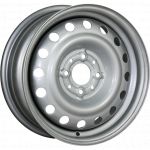
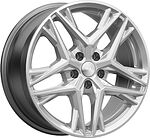
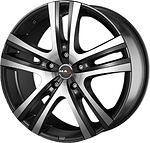
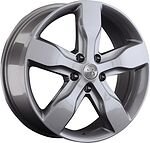
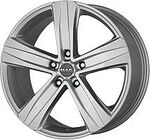
- PCD 5x115 диаметром от 17 до 20, шириной от 7 до 11 и профилем от ET-2.5 до ET55как у Chrysler 300
Tires on Dodge Charger
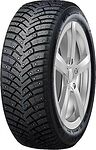
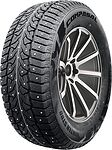
- Tyre size from R13 to R21, width from 175 to 325 and profile from 35 to 75S.
- Minimum tyre size: 175/75 R13, maximum: 325/35 R20








Tires on Dodge Charger (Додге)
The Dodge Charger is a passenger car model that has been produced since 1966. This name was used by the North American manufacturer for mid-size sedans, coupes, and hatchbacks.Creation History
The car owes its existence to the Ford Mustang, a sports coupe created in 1964 based on the Falcon sedan. In turn, the Dodge Charger was an attempt by the North American manufacturer to offer a similar concept car, but larger in size with an increased level of comfort and quality materials in the trim. The model debuted in mid-1966. It was a mid-size fastback with two doors, created on the Chrysler B-body platform. The main mechanical components and styling solutions were borrowed from the Coronet coupe. The target audience was potential Ford Mustang buyers who were not satisfied with its asceticism and small size. But as a result, the car attracted much more attention. Inside the cabin, there were four "racing" buckets, a sports instrument panel. The front end was attractive due to the continuity of the "grille" radiator grille with hidden headlights. The rear end also had continuous lights. Under the hood was a 5.2-liter V8 gasoline engine, which in the base trim worked in pair with a 3-speed manual transmission. As an option, several more V-shaped "eights" were offered, but with a volume of up to 7 liters, as well as a 3-range "automatic" with a floor-mounted gearshift.Second Generation
The car of the next generation was released in 1968. Technically, it was a modernized version of the predecessor, using the same platform. The key external change was the transition to twin headlights and rectangular rear light blocks. The engine range was composed of engines from the previous model. The only exception was the 3.7-liter Slant-6 gasoline engine, which appeared in the car in 1968. The power unit was distinguished by its "square" shape and high torque at low revs.Third Generation
In 1971, the premiere of the car of the third iteration took place. It still used the Chrysler B-body platform, but in a modified version, thanks to which the coupe became larger, and the list of available components was wider. Externally, the car, although it retained stylistic similarities with its predecessor, differed significantly from it. In the rear, there was a "fuselage" made of curved steel panels. The hood was equipped with a retractable scoop, which rose above the air intake, controlled by a vacuum switch under the instrument panel inside the cabin. The engine range became even wider and started with a "square" in-line 6-cylinder engine with a volume of 3.7 liters. The most dynamic modifications were equipped with a 7.2-liter V8. All power units had hardened valve seats, which allowed the use of unleaded gasoline without any consequences. A year later, the manufacturer removed the retractable scoop on the hood, but added versions with a transmission with reduced gear ratios and a strengthened suspension.Fourth Generation
The car presented in 1975 had a different concept. It was an attempt by the manufacturer to enter the segment of representative class models. Externally, it differed from its predecessor in design, calculated on an audience with conservative views, for which rectangular shapes were popular. For this reason, problems arose for the manufacturer's racing team in NASCAR, since such a car had much worse aerodynamics than its predecessor. Another difference was a significantly reduced engine range. This time, it consisted exclusively of gasoline V8s with a volume of 5.2 to 6.6 liters. Depending on the modification, they worked in pair with 3- and 4-speed manual transmissions, or with a 3-range "automatic".Fifth Generation
In 1981, the manufacturer continued to experiment with the concept of the car. The 5th generation model represented a compact coupe-like 3-door hatchback with front-wheel drive. Moreover, the base engine was a 1.7-liter in-line "four" from Volkswagen, which was later replaced by a 1.6-liter 6J from Peugeot. The most "dynamic" modifications were equipped with turbocharged 4-cylinder engines with a volume of 2.2 liters, developed by Chrysler. In this form, the car lasted on the assembly line until 1987, after which it was discontinued.Sixth Generation
The car of the 6th generation appeared only in 2005, after two decades of oblivion. Neither technically nor externally did it have any connection with its predecessors, representing a classic 4-door sedan created on the Chrysler LX platform. In the base trim, it was equipped with a "pair" of a 2.7-liter V6 gasoline engine and a 4-speed automatic transmission. Some components were borrowed from the "platform-related" Mercedes-Benz E-Class and S-Class - front suspension with double wishbones, rear suspension with 5 levers and a support, 5-speed "automatic", cardan shaft, rear differential, various electronic systems, as well as four-wheel drive 4MATIC.Seventh Generation
In 2011, the premiere of the car of the next iteration took place. Structurally, it was a modernized version of the predecessor, but stylistically it differed in similarity with models released in the late 1960s and early 1970s. Moreover, the concept was similar. In the base version, the car was equipped with a V6 Pentastar, a new engine at that time with a volume of 3.6 liters, distinguished by the presence of a phase control system and a chain drive instead of a belt. The most dynamic versions received the legendary HEMI V8 with a volume of 5.7 and 6.2 liters. The base modifications had a 5-speed "automatic" from Mercedes-Benz, and the more expensive ones had an 8-range "automatic". If the cars of the first generations cannot be called popular in our country, with the exception of collectors, then the models released in the 2000s can be found on the roads quite often. This can be judged by the purchases of tires and disks of sufficiently specific sizes in the online store "Mosavtoshina".Advantages of selecting tires for Dodge Charger on our website:
- the catalog has a large number of tires for sports sedans and coupes of North American brands;- a wide selection of wheel disks designed for use under extremely high loads;
- a simple and comfortable automated selection system allows you to find several options that perfectly fit any version of this model in just a few minutes;
- our managers are always ready to help, providing any assistance in selecting tires and wheels.