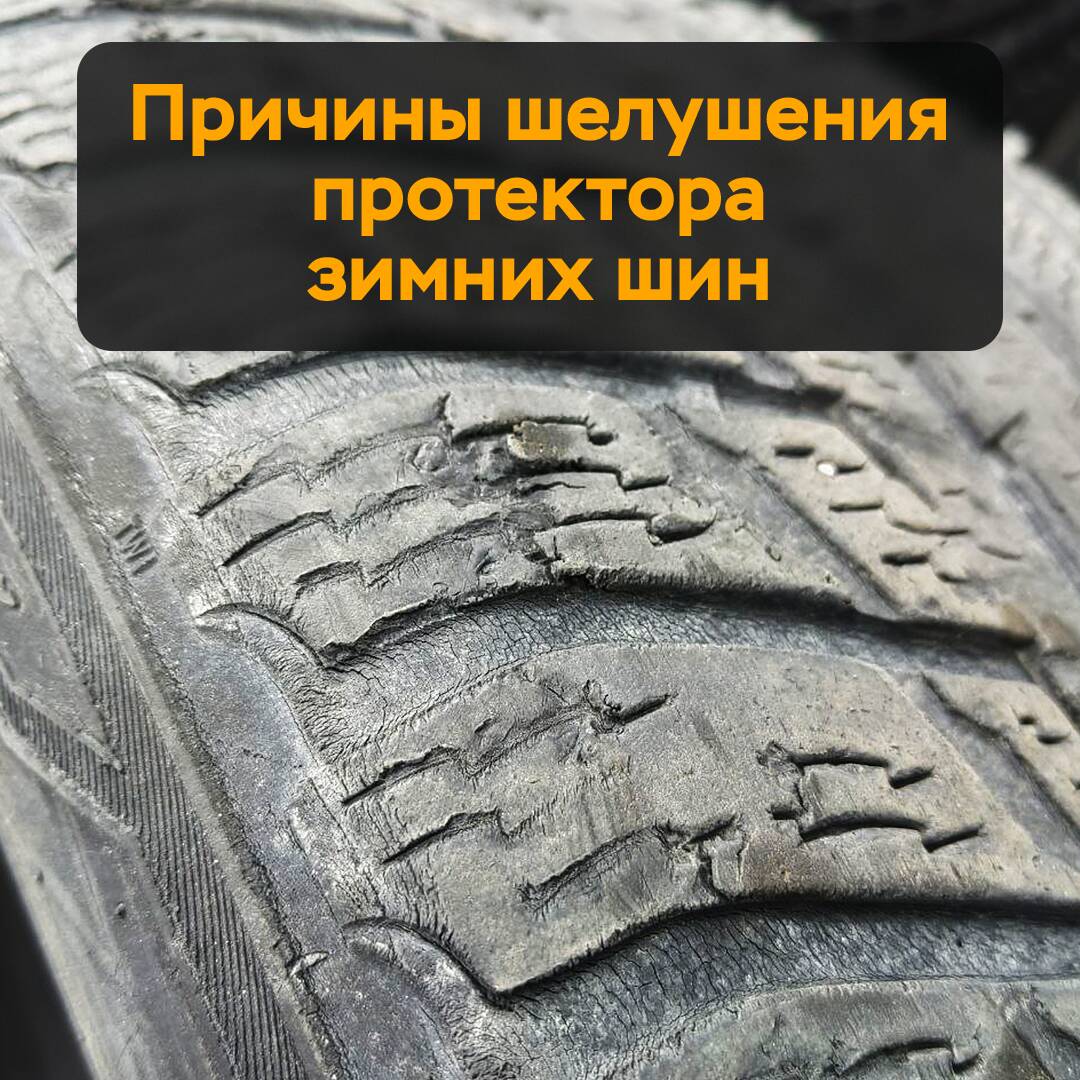
Causes of tread peeling of winter tires
Tire wear often indicates violations of tire operating conditions. We have detailed types of wear related to incorrect pressure or wheel installation angle. Today, we would like to talk about such wear as "tread chipping". This type of wear is not common and at first glance is associated with some manufacturing defect. But in reality, the reason is much simpler and often it is related to operating errors.
Operation
Often, this defect can be noticed in the summer segment of tires. For example, when tires designed for track rides or at least for city operation get on stony road surface. For the rubber compound of such tires, this is fatal, especially in a heated state. Winter tires are no exception. Yes, in winter there is no such clear segmentation as in summer, but as we remember, in winter tires there is an element such as "lamellas". They actually cut the blocks and make them more prone to damage.
Temperature fluctuations also affect the manifestation of tread chipping. The speech is rather about the violation of operating periods. We all hasten to change summer tires to winter ones with the onset of cold weather, while many operate winter tires until May, justifying the delayed tire change due to lack of time. In this case, it's no wonder if the winter tire tread simply can't withstand summer operating conditions.
Storage
This factor destroys most winter tires. It is incorrect storage that leads to the appearance of a fine mesh of cracks and subsequently to the crumbling of rubber. In combination with stony road surface, as described above, wear, of course, worsens. It is important to store tires according to the rules and not to allow violations.