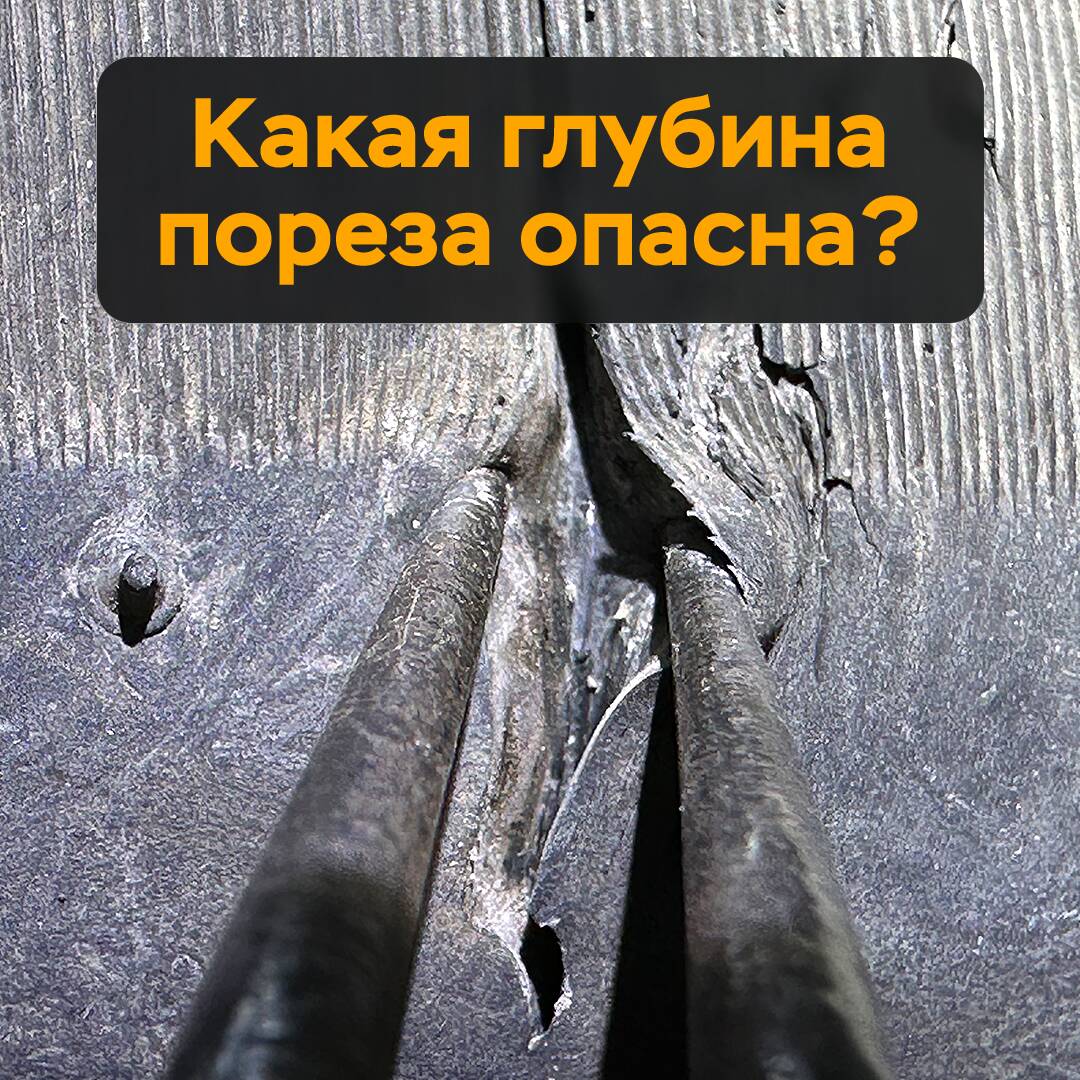
What depth of cut is dangerous?
The tire does not lose pressure, which means everything is fine with it. This is exactly what most drivers think. In fact, this is not the case. The sealant layer, which replaces the camera and frame in modern tires, is a fairly reliable element of the tire. They indeed withstand strong pressure under heavy load, but damage that seems harmless at first glance significantly weakens them.
We have already written about the fact that any unrepaired cut on the tread will eventually lead to tread deformation, since moisture and air begin to enter the tire structure. It is especially important to pay attention to the sidewalls of the tire. The sidewall of the tire contains 1-2 layers of frame and a small protective layer of rubber that protects the frame. The total thickness of the sidewall is often no more than 5 mm. It is important to understand that when the rubber layer is damaged, moisture still begins to penetrate inside, and considering that the tire frame is made of textile materials, moisture penetrates not only in the area of damage but also begins to absorb further.
When rolling, the sidewall of the tire is constantly deformed, and moisture begins to penetrate further into the frame structure, like a pump, remaining in the tire structure for a long time. Naturally, the metal elements of the tire suffer first, leading to the same deformation, but, in addition, other components of the tire also change their properties.
The conclusion is simple. Even the most harmless-looking damage can turn out to be a source of big problems in the future. A visible indicator of danger is the visible elements of the tire under the rubber, such as breaker layers or the tire frame. Be that as it may, having noticed the damage, the best solution may be a complete inspection of the tire at a specialized tire center.